Split the Opinion, Not the Bankroll: A Czech Two-Slip Routine for US Sports Bets
Photo: Rept0n1x, CC BY-SA 3.0, via Wikimedia Commons
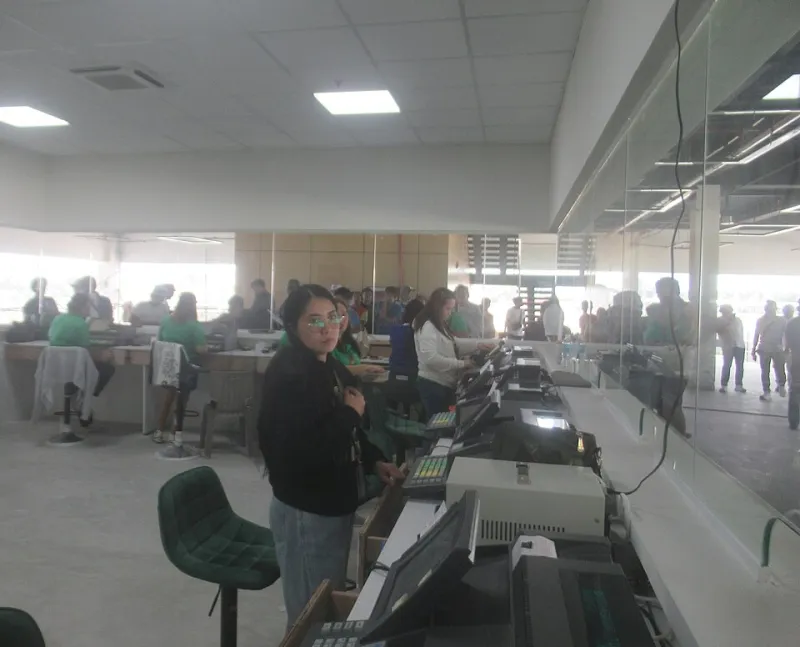
In a Czech betting shop, a ticket is a visible object. You write it, you pay for it, and you keep it separate from the next one. That physical separation encourages a useful habit: one opinion can be expressed in more than one way without every thought being crammed onto a single slip. US sportsbook apps make the opposite easy. A spread, a total, a player prop, and a same-game parlay can all slide into one bet before the user has checked the math. The two-ticket test is a corrective.
At Merkur XTip Guide, we treat the method as a betting-education tool, not a promise of profit. The goal is cleaner decision-making: a core ticket that carries the main thesis, and a smaller speculative ticket that captures a secondary thought only when it is worth the extra risk.
What the Two-Ticket Test Actually Asks
The test begins with one opinion, not five. You write down the main reason you want to bet a game, then decide whether that reason deserves a standard stake, a small add-on, or no action at all. The core ticket is the disciplined expression of the opinion. The second ticket is optional. It is not a required companion, and it is not a way to turn a 1% bankroll bet into a 6% bankroll bet by accident.
The method borrows from the Czech betting-shop style of keeping slips separate. A bettor might place a straightforward match bet on one slip and a small correct-score or prop bet on another. The two are related, but they are not blended into one opaque product. US bettors can use the same logic with spreads, moneylines, totals, and player markets.
Step 1: Write the Opinion in One Sentence
Before opening the app, write the opinion in one sentence. For the NFL, it might be: ‘I think the Bills at -3.5 are too short because their pass rush matches up well against this offensive line.’ For the NBA, it might be: ‘I think Jokic over 9.5 assists is the cleanest number on the board because the opponent concedes assists to centers.’ For college football or basketball, it might be: ‘I think the underdog moneyline is live because the favorite has a short-week travel spot.’
If the opinion cannot fit in one sentence, it is not ready for a ticket. A paragraph of overlapping reasons usually produces a paragraph of overlapping bets.
Step 2: Convert American Odds Before Sizing
US bettors see American odds, but stake sizing is easier in decimal form. For positive American odds, decimal odds = 1 + (American odds / 100). For negative American odds, decimal odds = 1 + (100 / absolute value of American odds). Implied probability is 1 divided by decimal odds.
| American odds | Decimal odds | Implied probability |
|---|---|---|
| +150 | 2.50 | 40.0% |
| -110 | 1.91 | 52.4% |
| -150 | 1.67 | 59.9% |
| +220 | 3.20 | 31.3% |
This step matters because plus-money prices can look like free upside. A +220 ticket still loses more often than it wins. Converting to decimal makes the cost of the speculative ticket visible before the stake is entered.
Step 3: Set the Core Ticket
The core ticket should carry 1% to 2% of the bankroll. It should use a liquid market: an NFL spread or total, an NBA spread or main total, a college moneyline or major spread. It should not depend on three unrelated events. The core ticket is allowed to be boring. In fact, boring is a feature.
If a $2,000 bankroll is the working number, the core ticket is $20 to $40. That stake should survive a loss without changing the next week’s plan. If the core ticket cannot be placed at a price that matches the written thesis, there is no core ticket.
Step 4: Set the Speculative Add-On
The second ticket is capped at 0.25% to 0.5% of the bankroll. On a $2,000 bankroll, that is $5 to $10. It can be a player prop, a smaller college market, or a short parlay. It should not repeat the core ticket’s legs, and it should not rely on the same injury news or weather report. The total exposure across both tickets should stay at or below 2.5% of the bankroll.
A practical example: the core ticket is an NFL team at -3.5 for $30. The second ticket might be a small same-game prop tied to the same game, but only if it tells a different part of the story and costs $5. If the prop merely doubles the core thesis, skip it.
Step 5: Apply the Stop Rules
The second ticket is not worth buying when any of the following is true:
- The combined stake would exceed the 2.5% cap.
- The add-on depends on the same news, weather, or injury as the core ticket.
- The price requires more than three legs to tell the story.
- The line has moved past the number written in the original thesis.
- The only reason to buy it is an app prompt or a bonus banner.
- The settlement rule cannot be explained in plain language.
- The bettor cannot afford to lose both tickets without changing household plans.
These stop rules are the heart of the method. The two-ticket test is not a mandate to buy two tickets. It is a permission structure for buying one clean ticket and leaving the second idea alone.
How It Looks Across US Markets
In the NFL, the core ticket might be a favorite at -2.5, while the speculative add-on is a small anytime touchdown prop at a higher price. In the NBA, the core ticket might be a team total under, while the add-on is a low-stake assist prop. In college basketball, the core ticket might be a moneyline on a ranked team, while the add-on is a small first-half spread. The categories change; the stake caps do not.
The Czech betting-shop habit behind the method is simple: separate slips keep separate decisions visible. A bettor can review the core ticket on its own and the speculative ticket on its own. If the second ticket fails, the first one still stands as the primary opinion. That is a healthier structure than a single crowded parlay in which one weak leg erases the entire thesis.
The Bottom Line
The two-ticket test is not designed to increase the number of bets. It is designed to reduce the number of confused bets. Write the opinion, convert the odds, cap the core stake, cap the add-on, and apply the stop rules. If the second ticket does not clear those conditions, the smarter bet is often the one that never gets printed.